
Smart casual sock style checklist: your 2026 guide
Smart casual sock style checklist: your 2026 guide
A smart casual sock style checklist is the difference between an outfit that looks considered and one that looks assembled in a hurry. Socks are the one detail most people treat as an afterthought, yet they sit at the exact visual junction between trousers and shoes. Intentional sock choices separate a polished appearance from a careless one. This guide covers every criterion you need: colour coordination, pattern scale, sock length, material weight, and the pitfalls that quietly undermine an otherwise sharp look.
1. What are the essential criteria for a smart casual sock style checklist?
The smart casual sock guide starts with five non-negotiable criteria: colour, pattern, length, material, and fit. Get these right and every other decision becomes straightforward.
Colour is the foundation. Your socks should either match your trousers to elongate the leg, or pick up an accent colour already present in your outfit. Matching your socks to your shoes is a safe default, but matching to your trousers is the more refined move.
Pattern must stay subtle. Small-scale patterns like pin dots, fine ribs, or clock motifs are acceptable in smart casual settings, provided they are smaller than every other pattern element in the outfit. A bold check sock worn with a plain trouser can work. A bold check sock worn with a patterned shirt is visual noise.
Length depends on your trousers and shoes. Mid-calf socks are the default for smart casual. Crew socks work with most cuts. No-show liners are situational, not universal.
Material signals quality immediately. Cotton blends are the everyday standard. Merino wool is the upgrade that earns its price across every season.
Fit is underrated. A sock that bunches at the ankle or slides into your shoe mid-afternoon undermines every other correct decision you made.
- Match sock colour to trousers for a longer, leaner leg line
- Keep patterns smaller than other outfit elements
- Choose mid-calf length as your default for smart casual occasions
- Prioritise natural fibres: cotton, merino wool, or linen blends
- Avoid white athletic socks with any smart casual or formal combination
Pro Tip: Build your sock wardrobe around three neutral tones first: navy, charcoal, and stone. Add personality through texture and subtle pattern once those bases are covered.
2. How to coordinate sock colours and patterns for smart casual looks
Colour coordination in sock styling follows one of three approaches: tonal blending, accent matching, or contrast. Each has its place, and knowing which to use is the core skill in any smart casual sock guide.
Tonal blending means choosing a sock in the same colour family as your trousers. Navy trousers with navy socks create a continuous line from waist to shoe. This elongates the leg and keeps the eye moving upward. It is the most forgiving approach and works across every body type.
Accent matching means pulling a colour from elsewhere in your outfit. If your shirt has a burgundy stripe, a burgundy sock ties the look together without shouting. This technique rewards those who plan their outfits as a whole rather than assembling them piece by piece. Coordinating accessories follows the same logic. The same principle that applies to pairing a bracelet with a watch applies here: repetition of a colour or material creates cohesion.
Contrast is the advanced move. A charcoal trouser with a mustard sock creates a deliberate focal point. This works only when the rest of the outfit is restrained. One statement element per outfit is the rule.
For patterns, the hierarchy is clear. Avoid bold, high-contrast novelty patterns in smart casual settings. Fine textures, pinstripes, and tonal colours are the correct register. Large or novelty patterns belong to weekend casual wear, not a work event or social gathering where smart casual is the stated dress code.
- Tonal blending: match sock to trouser colour family
- Accent matching: repeat a colour already present in your shirt or accessory
- Contrast: one bold sock against a restrained outfit
- Patterns: pin dots, fine ribs, and subtle argyle only
- Reserve large geometric or novelty prints for weekend wear
Pro Tip: When in doubt, choose a sock one shade darker than your trousers. It reads as intentional rather than accidental.
3. Choosing the right sock length for various smart casual occasions
Sock length is not a minor detail. The wrong length in the wrong context creates a visual break that draws the eye for the wrong reasons.
Mid-calf is the gold standard for smart casual. It stays visible when you sit down, which matters in meetings and at dinner. It does not slip, and it covers the leg gap that appears when trousers ride up. For most smart casual occasions, mid-calf is the correct default.
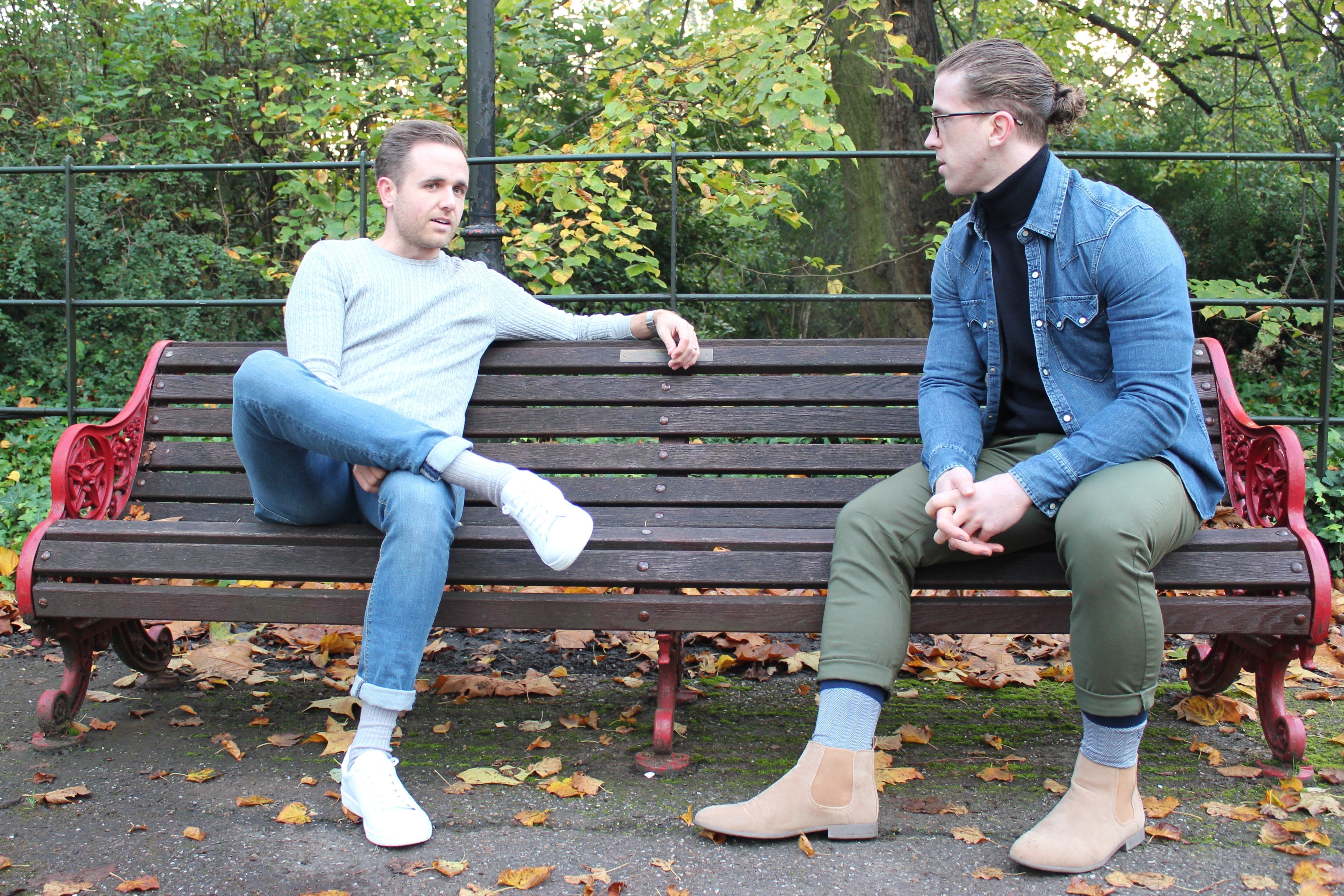
Crew length sits just below the calf. It works well with chinos and straight-leg trousers. With cropped trousers or turn-ups, crew socks become a deliberate style statement because they are consistently visible. Choose a crew sock with intention when wearing cropped cuts.
No-show liners serve a practical purpose in warm weather. No-show liners work with linen trousers and loafers during summer smart casual events, but they are not a style statement and are unsuitable for professional business settings. They solve a comfort problem, not a style one.
- Mid-calf: default choice for smart casual across all seasons
- Crew: works with chinos and straight cuts; becomes visible with cropped trousers
- No-show: warm weather and loafers only; not appropriate for professional settings
- Avoid ankle socks with formal shoes; the gap between trouser hem and shoe reads as unfinished
- With cropped trousers, treat sock visibility as a feature and choose accordingly
For transitional seasons, a mid-weight cotton or merino crew sock handles both the temperature and the style requirement without compromise.
4. Material and weight: matching socks to shoe types and seasons
Merino wool is the most versatile dress sock fibre, regulating temperature and resisting odour across formal and smart casual uses. Mid-calf merino socks in navy, charcoal, or forest green are the most practical investment in a smart casual wardrobe. They work from September through April without adjustment.
Cotton blends are the summer standard. They breathe, wash well, and hold their shape across frequent use. A mid-weight cotton sock in a plain colour or subtle texture covers the majority of smart casual occasions from may through august.
Linen blends are the specialist option. They are lighter than cotton and more breathable, which makes them ideal for outdoor summer events. The trade-off is durability: linen blends wear faster and require more careful laundering.
Match sock weight to shoe weight to maintain visual balance. A thick merino sock with a slim Oxford shoe looks disproportionate. A fine cotton sock with a chunky Derby shoe looks underdressed. The visual weight of sock and shoe should feel equivalent.| Material | Best season | Best shoe pairing | Key benefit |
|---|---|---|---|
| Merino wool | Autumn–spring | Oxford, Derby, loafer | Temperature regulation, odour resistance |
| Cotton blend | Year-round | Loafer, chino boot, trainer | Breathability, easy care |
| Linen blend | Summer | Loafer, espadrille | Maximum breathability |
| Cashmere | Winter | Oxford, Chelsea boot | Warmth, exceptional softness |
Pro Tip: Buy merino socks in your three core neutral colours first. They outlast cotton in both durability and versatility, and they work across more occasions per pair.
For hygiene and longevity, rotate at least five pairs across a working week. Wearing the same pair on consecutive days degrades the fibre faster and reduces the sock's ability to regulate moisture.
5. Tips and common pitfalls when styling socks for smart casual environments
The most common mistake in smart casual sock styling is the white athletic sock. White athletic socks disrupt visual continuity and are inappropriate with smart casual or formal tailoring. This is not a matter of personal taste. It is a matter of visual logic: a white sock creates a hard break between trouser and shoe that the eye cannot ignore.
The second most common mistake is treating socks as invisible. Socks chosen without deliberate intent produce a thrown-together aesthetic, even when every other element of the outfit is correct. The sock is the last detail, and last details are what people remember.
"The intentionality of the sock is what separates a polished appearance from a careless one. A sock chosen deliberately, whether as a visible style statement or a hidden tool for comfort, signals that the wearer has considered the whole outfit rather than assembled it."
The scrunch technique for crew socks worn with loafers creates a relaxed, louche aesthetic. Rather than pulling the sock up to its full height, you let it gather slightly around the ankle. This counters the formality of the loafer with a casual touch and works particularly well with tailored shorts or cropped trousers in warmer months.
Bold socks can express personality without derailing a smart casual look, provided the rest of the outfit is restrained. A plain navy suit with a burnt orange sock is a statement. The same orange sock with a patterned shirt and printed pocket square is a collision.
- Never wear white athletic socks with smart casual or formal outfits
- Choose every sock deliberately, even when the choice is to go unnoticed
- Use the scrunch technique with loafers for a relaxed, considered effect
- Reserve bold or novelty socks for outfits where everything else is plain
- Use no-show liners only when sockless is the practical goal, not the style goal
For a deeper look at building a wardrobe that works across long days and varied occasions, the professional sock wardrobe guide from Sock Geeks covers patterns and textures suited to smart casual dress codes in detail.
Key takeaways
The most effective smart casual sock style checklist prioritises intentional choices across colour, pattern, length, material, and fit, treating socks as a deliberate part of the outfit rather than an afterthought.
| Point | Details |
|---|---|
| Intentionality is non-negotiable | Choose every sock deliberately; accidental choices undermine even a well-assembled outfit. |
| Colour coordination drives cohesion | Match socks to trousers for elongation, or accent-match to a colour already in the outfit. |
| Pattern scale must stay small | Pin dots, fine ribs, and subtle textures are correct; novelty prints belong to weekend wear only. |
| Material should match the season and shoe | Merino wool for cooler months, cotton or linen blends for summer; match sock weight to shoe weight. |
| Length depends on context | Mid-calf is the default; no-show liners are practical tools, not style statements. |
Why sock styling is the detail most people get wrong
I have spent years paying attention to how people dress for smart casual occasions, and the sock is consistently the element that reveals whether someone has thought the outfit through or simply grabbed what was clean. It is not about spending more money. It is about spending thirty seconds more attention.
The trend I find most encouraging in 2026 is the growing acceptance of the visible sock as a deliberate choice. Cropped trousers and loafers have made the sock a focal point rather than a hidden detail, and that shift has forced people to think about what they are actually putting on their feet. That is a good development.
What I find less encouraging is the persistence of the "any sock will do" attitude in professional settings. A sock chosen without thought signals something about the wearer's relationship to detail. That signal is rarely the one they intend to send. The fix is simple: plan your socks when you plan your outfit, not as you are walking out the door.
My practical advice is to start with socks suited to long work days, where comfort and style must coexist. Once you have that foundation, experimenting with colour and pattern becomes easier because you already know what works structurally.
SirLuxe: quality socks curated for smart casual style
SIrLuxe has built its reputation on the idea that socks deserve the same consideration as any other part of your wardrobe.
FAQ
What socks are best for smart casual occasions?
Mid-calf merino wool or cotton blend socks in navy, charcoal, or stone are the best choices for smart casual occasions. Choose subtle patterns like fine ribs or pin dots, and match sock colour to your trousers or shoes.
Can I wear patterned socks with a smart casual outfit?
Yes, provided the pattern is small-scale and smaller than any other pattern element in the outfit. Pin dots, fine ribs, and subtle argyle work well. Large or novelty patterns belong to weekend casual wear only.
Are no-show socks appropriate for smart casual events?
No-show liners are appropriate for warm weather smart casual outfits, particularly with loafers and linen trousers. They are not suitable for professional business settings, where mid-calf socks are the correct choice.
How do I avoid the most common sock styling mistakes?
Never wear white athletic socks with smart casual or formal outfits, as they disrupt the visual line between trouser and shoe. Choose every sock deliberately, even when the goal is for the sock to go unnoticed.
What is the scrunch technique and when should I use it?
The scrunch technique involves letting a crew sock gather slightly around the ankle rather than pulling it to full height. Use it with loafers and cropped trousers for a relaxed, considered effect in smart casual settings.
